Fatehpur Sikri: History, Architecture, Tickets, Timing & Travel Tips
Fatehpur Sikri: History, Architecture, Tickets, Timing & Travel Tips
Fatehpur Sikri is the historical city of magnificent gateways, imperial palaces, and, charming courtyards, with exquisitely carved red sandstone buildings throughout. Situated near Agra in Uttar Pradesh, it was the ancient capital of the Mughal ruler Akbar’s empire. While it was only the capital for a short time, its incredible buildings and compelling history have made it one of India’s most important tourist attractions.
Taking a walk around Fatehpur Sikri will really transport you back in time. You’ll see some stunning architecture including the amazing Buland Darwaza, peaceful Tomb of Sheikh Salim Chishti, impressive Panch Mahal and the royal homes. However, there is so much more to this place than just the architecture. Discover the vision behind Akbar’s creation of the site and how he had a strong bond with Sufi saint Salim Chishti.
This incredible location has been recognised as a UNESCO World Heritage Site meaning it is well worth visiting if you’re any history or architecture lovers. This guide will take you through everything you need to know if you’re planning to visit Fatehpur Sikri from Agra or as part of your Golden Triangle tour. We’ll talk you through the history, top attractions, ticket prices, opening times, best time to visit and lots of other travel tips!
Fatehpur Sikri at a Glance
Fatehpur Sikri is a historic Mughal City fort built by Akbar in 16th century AD. Mughal Capital for relatively less period, the fort has been registered as UNESCO World Heritage Site. City walls, grand gateways, royal palaces and temples are acclaimed in the city because of their unique red stone architecture. The architecture of the city shows the blend of styles that evolved in the Akbar period.
| Information | Details |
| Location | Agra district, Uttar Pradesh, India |
| Built by | Mughal Emperor Akbar |
| Construction period | In 1571 |
| Historical significance | Former Mughal imperial capital |
| Architectural style | Mughal, Persian, Islamic and Indian influences |
| Main building material | Red sandstone |
| UNESCO status | In 1986 |
| Ideal visit duration | 2–3 hours |
| Best time to visit | Winter (October to March) |
History of Fatehpur Sikri
The history of Fatehpur Sikri is directly related to the Emperor Akbar, and, the development of Mughal Empire. Emperor Akbar was one of the most powerful empires in the Indian sub – continent during the 16th century. Emperor Akbar was a prominent personality and aimed to spread empire and develop a sound administrative system. Prior to establishing Fatehpur Sikri as his imperial capital, the site of Fatehpur Sikri was linked with the Sufi saint Sheikh Salim Chishti. Akbar journeyed to pay homage to the saint and it is said that he consulted the saint for a son. After the birth of his son, Prince Salim (later Emperor Jahangir) Akbar established the city as a key royal court. Work started circa 1571 and the city slowly grew into a spectacular city of palaces, government buildings, mosques and public spaces. It became a reflection of Akbar’s omnipotence, outlook, and concept of architecture. Despite the brief period it served as the imperial capital, Fatehpur Sikri remains one of the most striking examples of Mughal urban planning and architecture.
Who Built Fatehpur Sikri ?
The construction of the city was started by Akbar 1571 and it was made as his capital city. Akbar was responsible for the hiring of talented craftsmen, stone workers and builders to build the many fine monuments. Many of the buildings have influences from various painting and architectural styles including Indian, Persian and Islamic.
Why Did Akbar Build Fatehpur Sikri ?
Akbar built Fatehpur Sikri largely due to its ties with Sheikh Salim Chishti. As per legend, Akbar approached the Sufi saint seeking an heir. After the birth of Prince Salim, Akbar decided to establish the locality as a vital royal centre. Akbar aimed to create an elegant imperial city to better project his power and ideas for the Mughal empire. It also gave room for kings’ houses, chambers and holy places and gatherings of the public. It enabled a well-organised imperial palace complex of the political, cultural and religious hub.
Why Was Fatehpur Sikri Made the Mughal Capital ?
Fatehpur Sikri was chosen to be the Mughal capital as Akbar sought to build a major imperial centre at a spot that had historical significance for his family and faith. This new city was built so the emperor had a new area of administrative and living space, with large palaces, open spaces, and courtyards. The city also exemplified the increasing power of the Mughal Empire. Fatehpur Sikri was the main imperial city of the empire for many years from around 1571. The imperial city was a centre of court life, royal ceremony and political events, until the imperial headquarters moved to somewhere else.
Why Was Fatehpur Sikri Abandoned ?
Water supply problems, shift in military focus, and administrative needs are the culprits for the loss of Fatehpur Sikri as the Mughal capital. By 1585 Akbar moved his imperial court to Lahore, largely due to the need to oversee the north-west frontiers of the empire. However, gradually the city declined as the capital of the Mughal Empire. Water shortage is also mentioned as another potential cause of the migration, but there is no consensus among historians that a single factor was responsible for the city’s abandonment. Fatehpur Sikri may have lost its role as the imperial capital, but it was never lost to history. Its structures remained and went on to form the heart of India’s architectural and cultural traditions.
Fatehpur Sikri During the Mughal Empire
During Akbar’s reign Fatehpur Sikri was an important imperial capital. It had royal palaces to house the emperor and royal family. It also had government buildings. The city had open courtyards, places of worship, palaces and grand gateways. This reflected how organised the Mughal court was and how important architecture was. The city also reflects Akbar’s interest in culture. The buildings have a mix of different styles which makes it an important example of the art and architecture during his reign.
Architecture of Fatehpur Sikri
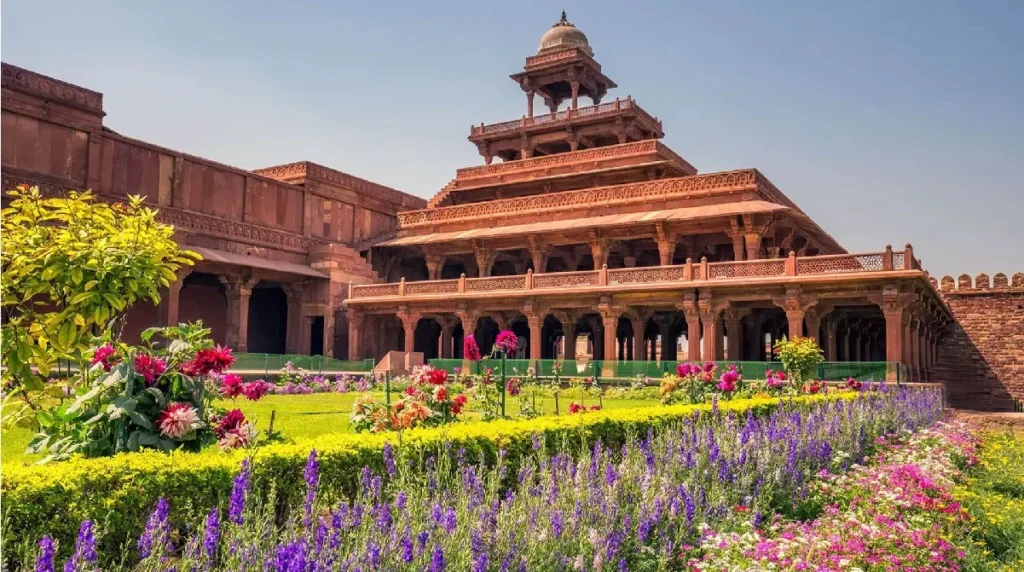
One of the most interesting things about Fatehpur Sikri is the architecture. There are red sandstone buildings, exquisite carvings, wide courtyards, fantastic arches and gatehouses. Fatehpur Sikri was not a dead end of building in one style like some of its other contemporary cities. It contains a mixture of Persian, Islamic, Indian and local culture. The buildings were organized into specific functions that serve as the centre of the royal patronage, the religious cult and the general public.
Mughal and Persian Architectural Influences
Fatehpur Sikri displays the vision of Akbars reign. The complex blends Persian and Islamic architecture with traditional Indian architecture. Iranian style can be seen with the use of symmetry, arches, domes and intricate patterns. Islamic architecture can be seen throughout the mosque complex, gateways and places of worship. The buildings also show local Indian craftsmanship with beautifully carved pillars, brackets, balconies and intricate designs. This has created a unique style which has become an important aspect of Mughal architecture.
Red Sandstone Construction
Many of the main buildings in Fatehpur Sikri have been built using red sandstone. This can be easily carved and therefore many wonderful features have been added such as decorative pillars, brackets, screens and intricate patterns. The red colour also adds a uniformity to the buildings. This can be seen clearly throughout the complex, particularly in the Buland Darwaza, Panch Mahal, Jodha Bai Palace and many other royal buildings.
Islamic, Hindu and Persian Design Elements
A fascinating feature of this place is the architecture of the city which is a merging of different traditions. Features like arches, geometric design, arrangements of mosques and calligraphic decoration. Persian symbols in the spatial arrangements and certain decorative elements. Carved columns, chhatris, brackets, balconies and decorative motifs also represent Indian architectural design styles. These display the variety of artistic styles contributing to the building design of the city of Akbar.
Carvings, Pillars and Decorative Details
Stonework was a distinctive feature of the monuments of Fatehpur Sikri. Artisans and masons covered columns, walls and window and door surrounds with an array of painted and carved decoration including floral and geometric motifs and architectural features. One of the most well-known features of Diwan-i-Khas is the interior pillar which is carved. The jali screens of the Tomb of Sheikh Salim Chishti are another great example of precise work done during this period. All these aspects make the city truly a delight for those tourists who are keen on photography, architecture and historical art.
Layout of the Royal Complex
Fatehpur Sikri was built as a planned city for royal residence with designated zones for ruling, administrative, and religious centres. Within the settlement were many different structures which included the palace of the king, open courtyards, other halls, gateways and the religious buildings. There was also open space between these to allow a gathering and movement of the city. The positioning of buildings also mirrored the organisation of the Mughal court at court, which included the separate locations for the king’s court, government and public palaces.
Famous Places to Visit in Fatehpur Sikri
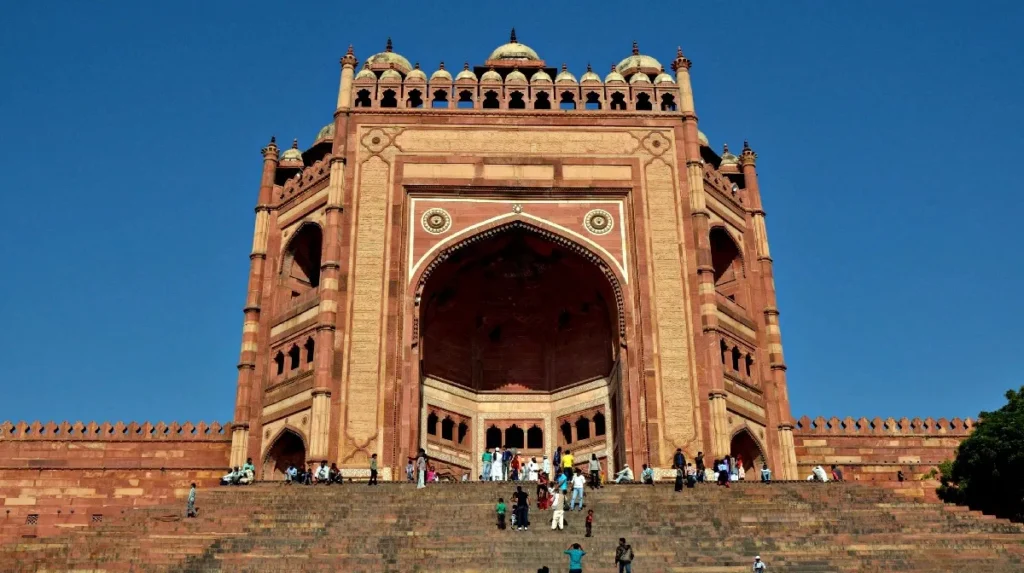
Fatehpur Sikri is home to several significant monuments that present distinct elements of Mughal life and architecture. From the colossal Buland Darwaza to the graceful Tomb of Sheikh Salim Chishti, every monument has its unique historical and architectural importance. Here are the highlights that you need to see during your visit.
Buland Darwaza
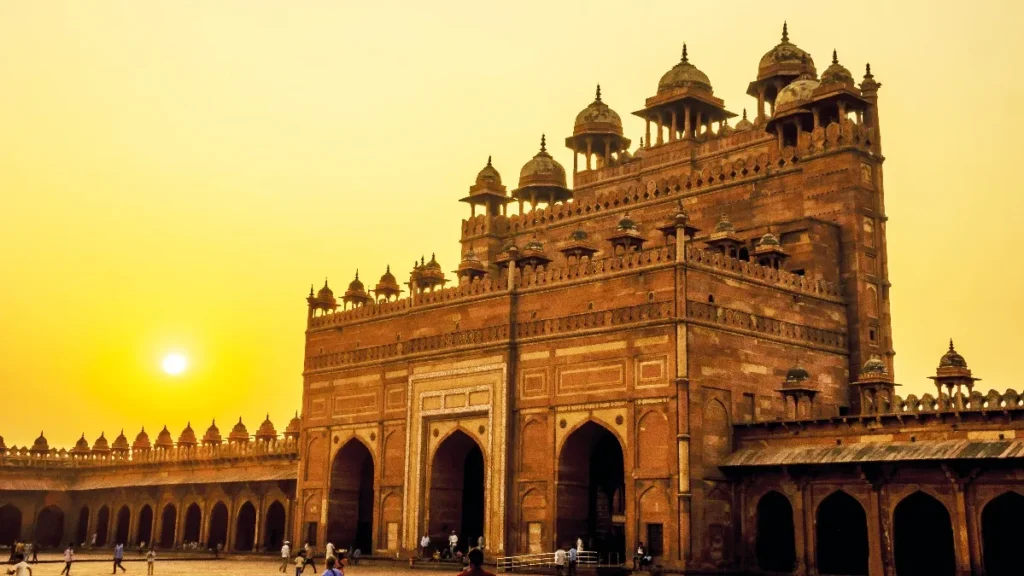
Buland Darwaza is one of the most magnificent gateways of Fatehpur Sikri and among the most well-known gateways of Mughal architecture. Built by Akbar, to celebrate his conquest of Gujarat, it is one of the largest gateways in the world. The gateway is famous for its huge size, red sandstone construction, ornate details and inscriptions. The archway is impressive, as is the grand entrance to it which in turn exemplifies the imperial power and ambitions of the Mughal Empire. Visitors should stop and take in the views and architectural features from the gateway.
Jama Masjid
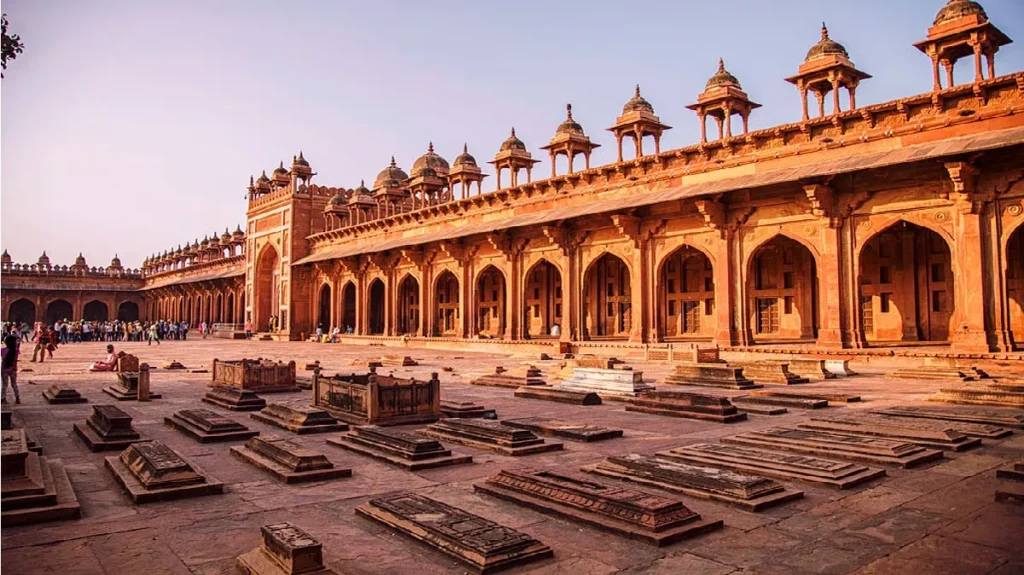
Masjid is one of the most significant religious buildings in the city of Fatehpur Sikri. The mosque was constructed to accommodate large gatherings and as such, serves as a notable congregational mosque. The mosque complex includes a spacious open court, prayer hall, decorative arches. This huge courtyard mirrors the significance of prayer meetings during Akbar’s rule. The tomb of Sheikh Salim Chishti is another significant feature of the mosque, which is located inside its precincts.
Tomb of Sheikh Salim Chishti
One of the most beautiful monuments in Fatehpur Sikri is the Tomb of Sheikh Salim Chishti. This monument is to honour the Sufi saint who had a close relationship with Akbar. The tomb stands out in comparison to the other red sandstone buildings due to being made from white marble. The tomb is very ornate with Jali screens and carvings, making it one of the highlights of the complex. Many enjoy looking at the amazing carvings on the marble and the serene feel of the tomb. It remains an important religious site.
Panch Mahal
The Panch Mahal, a five-storied pavilion, is one of the most prominent structures in Fatehpur Sikri. Its open form and the decreasing height of the upper stages make this building particularly conspicuous. There are many columns that support this structure, many with intricate carvings on them. These open galleries would have allowed for cool breeze to flow through, as well as giving views of the rest of the royal complex. Panch Mahal is a perfect embodiment of the artistic mind and the craftsmanship of Akbar’s time.
Diwan-i-Khas
Diwan-i-Khas is known for this single, unique pillar. The pillar has an intricately carved capital, from which stone brackets are drawn towards the corners of the hall. The unique design of this building makes it one of the most photographed buildings in Fatehpur Sikri. The accurate purpose and meaning of the structure have been written about by historians, but most opinions relate to it being connected with the private court proceedings and the emperor’s audiences.
Diwan-i-Aam
Diwan-i-Aam was the Hall of Public Audience in which, the emperor is said to have conducted his interviews with officials, visitors and commoners. Open courtyard, and a raised platform for royal appearances. The architecture recalls the Mughal emphasis on public ceremonies and a ruler’s concerns with the functioning of government. It gives some understanding of the functioning of the imperial court under Akbar.
Jodha Bai Palace
Jodha Bai Palace being the largest of all residential structures in Fatehpur Sikri. It is said to have a large courtyard, elaborately decorated doors, balconies and a mixture of styles. Although it is widely believed that the palace was built for Jodha Bai, historians have long argued over the identity of the original owner. The palace architectural style is a combination of Mughal and Indian. With its intricate stonework and room layout, this building is a major part of the royal estate.
Birbal’s House
Birbal’s House is associated with Birbal who was one of the most famous of Akbar’s court members. The building is noted for its detailed carvings, brackets and architecture. The true original owner and purpose of the building is not well documented despite the popular name. However, it remains an interesting example of the types of houses used in Fatehpur Sikri. People can see the stonework and how different the palace is from some of the other larger houses.
Mariam-uz-Zamani Palace
Mariam-uz-Zamani Palace. It is considered to be named after Mariam-uz-Zamani, a leading female personality of the Mughal court and the mother of emperor Jahangir. The palace has courtyards, carved stone details, and decorative features of architecture. The layout of the building gives visitors an impression of the inside of the homes occupied by members of the Mughal family. Adding this structure to our royal complex investigation would be beneficial.
Fatehpur Sikri Visiting Timings
The general visitor times at the archaeological site will be from sunrise until sunset however this can vary depending on local circumstances. It is best to visit the site early in the morning, particularly in the warmer months. This will give you more comfortable conditions.
Fatehpur Sikri Ticket Price
The entry fee for Fatehpur Sikri is inclusive of different types of ticket rules for various categories of visitors. Children below the age of 15 years are allowed free entry as per the ASI rules, for other visitors the entry fee varies according to the nationality. The ticket prices can fluctuate so always refer to the current official fee before your visit rather than an out-of-date price listed on the internet. Purchases of tickets must be made via the licenced ticketing agent.
Best Time to Visit Fatehpur Sikri
The best time to visit Fatehpur Sikri is generally between October and March due to more comfortable weather in the area. You will avoid the extreme heat by visiting during these months; however, the Summer can be very hot and the Monsoon months can be quite wet. Consider the weather forecast for the area and how much time you will be spending outdoors.
Winter Season (October to March) : The best time to visit Fatehpur Sikri is during winter. The weather is normally suited to take a stroll around the gigantic complex and visit the numerous monuments there. October and November, and it can be chilly in the mornings and evenings in December and January. The months of February and March are also ideal for a trip to the Agra area. Or if you are going to be travelling in between Agra and Fatehpur Sikri, winter is a perfect time of the year to visit both the sites.
Summer Season (April to June) : The temperatures in summer soar high in Fatehpur Sikri and the days are quite warm. Walking around the open space or in the stone complex can be quite tiring in the heat of the sun on summer afternoons. In summer, sightsee before noon, pack hydration, wear comfortable clothing, put on sun protection, and, stay out of the sun as much as you can.
Monsoon Season (July to September) : Monsoon season is the time when you get rain and a more humid climate. The atmosphere looks greener after a rainy day, so it looks different while sightseeing. But the weather can spoil your outdoor adventures, and certain walkways can be slippery – so always doublecheck the forecast before you travel and factor in some extra time. This season is most suitable for visitors who dislike crowds, and, are ready to face the fluctuating weather.
Ideal Duration to Visit Fatehpur Sikri
You can easily complete most of the major sights of Fatehpur Sikri in about 2-3 hours. This will include exploring the major buildings and enjoying the architecture and snapping photos of them. If one has especially an inclination towards Mughal history and architecture and detailed stonework one can stay longer at the site. Travellers residing in Agra may like to take Fatehpur Sikri as a morning or noon trip or they could also stretch it to be a part of sightseeing on a bigger scale.
How to Reach Fatehpur Sikri
Fatehpur Sikri is situated in Uttar Pradesh and about 36-40 km away from Agra depending on the road you take from where. It is accessible by air, road and rail through its nearby transport modes. Agra, which is the most suitable large city for travellers. It is also possible to make the visit in conjunction with other places of interest in the area.
- By Air : The best major airports for most travel is Agra Airport though this is likely to have less flights available. The other is Delhi’s Indira Gandhi International Airport, which will have more outbound and inbound flights available. Via Airport travellers can reach till the Agra and then go by road till the Fatehpur Sikri.
- By Train : Agra from many of the major Indian cities. You may arrive in Agra Cantt (or another Agra railway station) and then take taxi or other local transport to Fatehpur Sikri. Fatehpur Sikri has a railway station as well. However, the trains may not be very frequent, there might not be many direct trains, and, make sure to check the railway schedule before you plan your visit.
- By Road : This is one of the simplest ways of getting to Fatehpur Sikri from Agra. You will be able to find taxis, private cars and buses to take you there according to where you are. The road trip from Agra is typically 1-1.5 hours, depending on the traffic and other conditions. Travellers can drive from any other city to Agra and further onward to Fatehpur Sikri.
- By Local Transport : You may be able to use local transport such as taxis, auto rickshaws etc. If you want to have a comfortable visit to the site (especially if you are visiting with family or multiple attractions) you can book a taxi back from Agra. Make sure to check what the cost will be and how you can get back.
Places to Visit Near Fatehpur Sikri
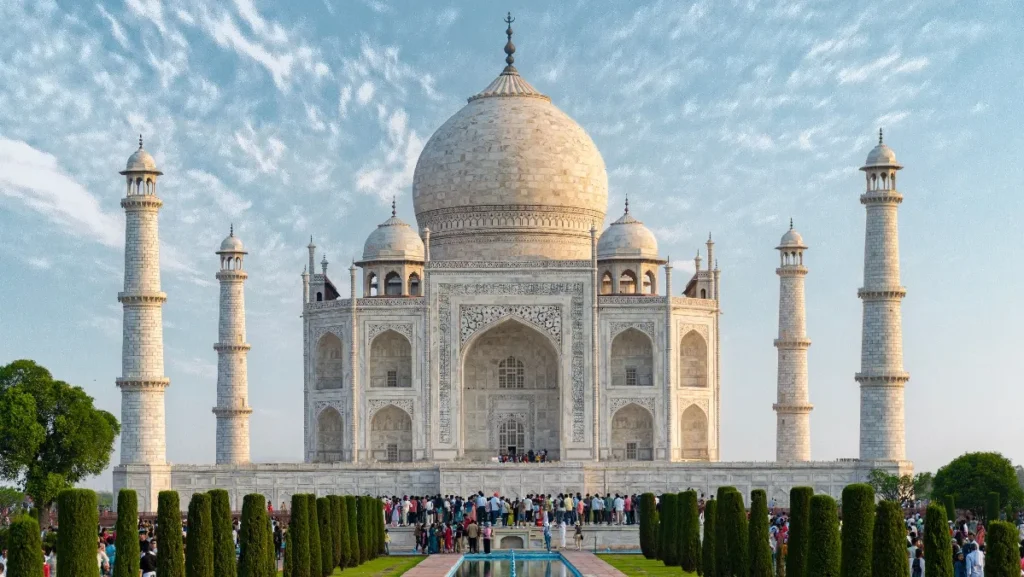
Fatehpur Sikri is a great addition to a more complete Agra sightseeing tour. The region around town also includes a number of different historical and natural attractions. For extra inspiration, here are some other destinations worth exploring.
Taj Mahal
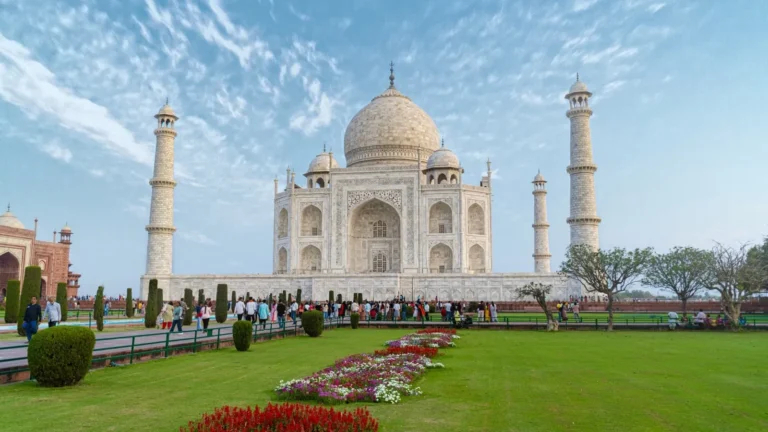
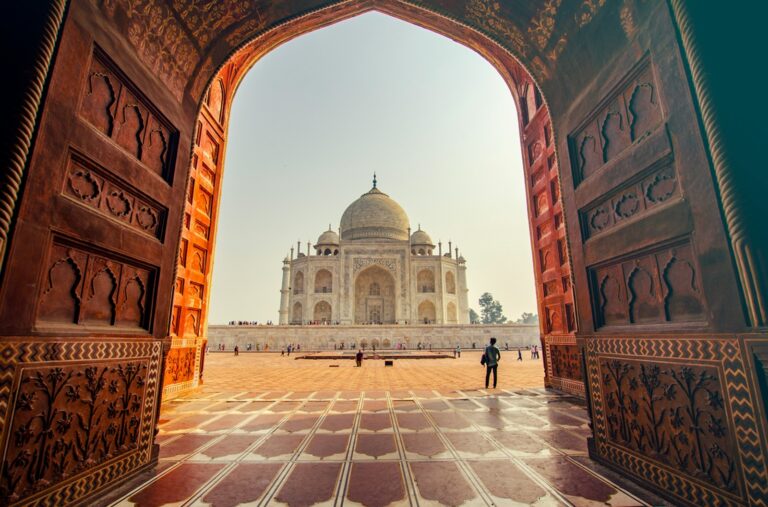
Taj Mahal is India’s most renowned monument and a UNESCO World Heritage Site. It is in Agra and was built at the behest of Mughal Emperor Shah Jahan for his spouse Mumtaz Mahal. The complex also is noted for the exquisite workmanship found in its white marble architecture and its gardens. If you want to visit the monument, you can check out our Taj Mahal Tour Guide for details on history, architecture, tickets, timings and tips to reach.
Agra Fort
Agra Fort is yet another Mughal monument located in Agra. In Mughal times it was an important imperial residence and seat of government. Within its walls there are palaces, audience halls, and courts, as well as many beautiful defensive structures. The fort has a history that is rich with the life of many Mughal emperors, particularly Akbar and Shah Jahan.
Itimad – ud – Daulah Tomb
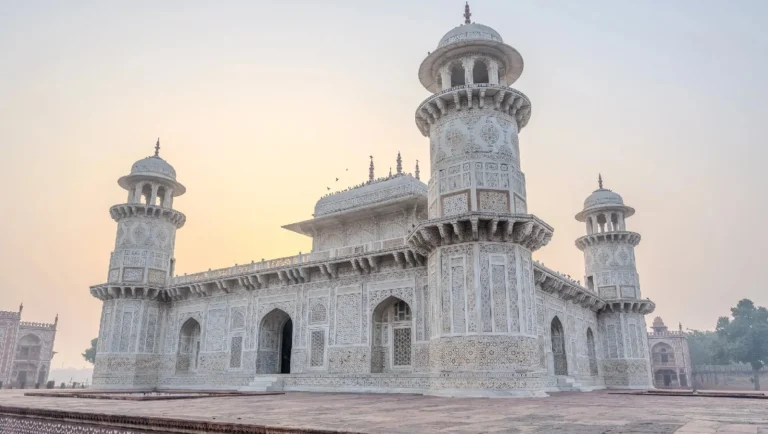
This beautiful Mughal monument located in Agra is often praised for its beautiful marbles and intricate designs. This was built by Nur Jahan to commemorate her father. It features amazing inlay work and beautiful architecture. It is often called the “Baby Taj” due to its use of white marble and beautifully designed elements. You can find more information on the history, architecture and visitor information by visiting our Itimad-ud-Daulah Tomb guide.
Akbar’s Tomb, Sikandra
Akbar’s Tomb at Sikandra is the tomb of Mughal Emperor Akbar. This extensive complex is distinguished by its massive entrance gateway, gardens and bold tomb structure. It also stands out due to it being a synthesis of styles represented during Akbar’s lifetime. A visit for those curious to find out a little more about the Mughal Empire.
Bharatpur Bird Sanctuary
Keoladeo Bird Sanctuary is a popular wildlife destination in Rajasthan. Known for its birdlife and wetland landscape, the Bird Sanctuary covers the vast Bharatpur Bird Sanctuary. Many bird lovers, photographers and birdwatchers come to the park with many resident and migrating birds. Bharatpur is a different day trip from Fatehpur Sikri. Allow for extra drive time if you want to add this to your schedule.
Travel Tips for Visiting Fatehpur Sikri
The tip to make your visit to Fatehpur Sikri more comfortable and easy is to make some small preparations. These great suggestions will certainly help you.
- Start early in morning
- Book accommodation & transportation in advance
- Wear comfortable clothes and footwear
- Carry drinking water
- Dress comfortably
- Respect religious places
- Heir an authentic guide
- Book your picket in advance to avoid crowd and queue
- Allow extra time
Final Thoughts on Fatehpur Sikri
Fatehpur Sikri is much more than a monument. It is a significant chapter of Mughal history and a testament to Emperor Akbar’s prowess as an architect. All of the city’s landmarks, from the lofty Buland Darwaza and the magnificent Jama Masjid, to the refined Tomb of Sheikh Salim Chishti and the lush palaces, have something to see. A mix of history, architecture and culture makes Fatehpur Sikri a must-see attraction near Agra. It is a place for a quick half-day trip or part of a Golden Triangle tour, giving you a taste of India’s Mughal past in one unforgettable visit.
FAQs – Fatehpur Sikri
Q. What is Fatehpur Sikri famous for ?
Ans. Fatehpur Sikri was the royal Mughal capital established by Mughal ruler Akbar and holding the great history of the dynasty, however there are lots of architecture which makes it popular among travellers.
Q. Who built Fatehpur Sikri ?
Ans. Fatehpur Sikri Fatehpur Sikri was constructed by Mughal Emperor Akbar in the year of 16th century. The construction work commenced approximately in the year of 1571 and the place soon became an imperial city that had palaces and buildings for administrative purposes as well as religious purpose.
Q. Why did Akbar build Fatehpur Sikri ?
Ans. History Akbar made Fatehpur Sikri due to the influence of the Sufi saint Sheikh Salim Chishti. There is an oral tradition that relates the saint’s blessing with the birth of Akbar’s son Prince Salim, and Akbar subsequently built the place into a royal palace and city.
Q. Why was Fatehpur Sikri abandoned ?
Ans. Akbar transferred the imperial capital to Lahore. In addition to considerations related to the north-western frontier and to government priorities and the difficulty of providing water, there is some evidence to suggest that Akbar was concerned to ensure safety of his rule. Historians offer no single reason for Lahore’s loss of capital status.
Q. What is the best time to visit Fatehpur Sikri ?
Ans. October to March is the ideal period for visiting Fatehpur Sikri as the weather is delightful for sightseeing. Summer is a little bit too warm and in monsoon it might also rain, making it sultry.
Q. Is Fatehpur Sikri a UNESCO World Heritage Site ?
Ans. Yes, it is UNESCO designated World Heritage Site, entitled in 1986.
Q. What are the main attractions in Fatehpur Sikri ?
Ans. There are lots of attractions to explore in Fatehpur Sikri including Buland Darwaza, Jama Masjid, Jodha Bai Palace, and, others already mentioned above.
Q. What is the entry fee for Fatehpur Sikri ?
Ans. The ticket price varies between the user category and the official Archaeological Survey of India ticket regulations. If the visitor is Indian and is a visitor from SAARC or BIMSTEC states.
Q. What are the visiting timings of Fatehpur Sikri ?
Ans. Typically, the timing of Fatehpur Sikri is sunrise to sunset.
Q. How much time is required to explore Fatehpur Sikri ?
Ans. It takes about 2-3 hours to see the major monuments. Some visitors may wish to spend more time at the site if they wish to study the architecture and history in great detail.
Q. Can Fatehpur Sikri be covered in one day ?
Ans. If you’re traveling from Agra, Fatehpur Sikri can be conveniently completed in a single day trip. It is possible to visit the primary sites within a few hours and extend the visit to other nearby areas according to time available.
Enquiry Now
Recent Blog
Itimad-ud-Daulah Tomb: History, Architecture, Tickets, Timings & Travel Tips
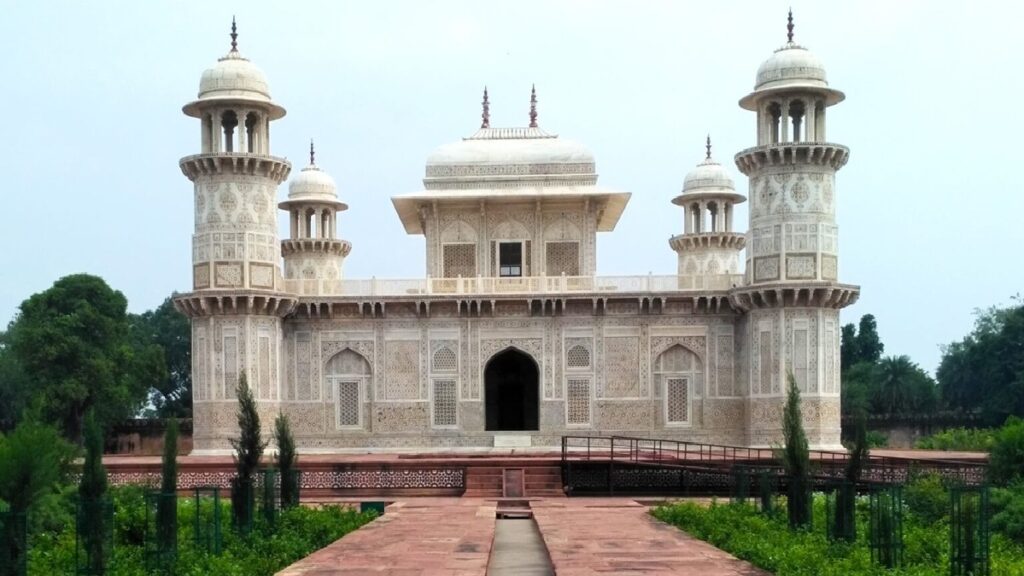
Agra is a city famous for its beautiful Mughal monuments and one of the best examples of this can be found at the Itimad-ud-Daulah Tomb. This beautiful marble tomb features some exquisite inlay work and is frequently referred to as the ‘Baby Taj’. The beautiful design makes it well worth visiting when you are in Agra. Find out more about the history of this monument, the architecture, opening times, admission charges and travel tips of Itimad-ud-Daulah Tomb by reading our full travel guide below.