
Itimad-ud-Daulah Tomb: History, Architecture, Tickets, Timings & Travel Tips
Itimad-ud-Daulah Tomb: History, Architecture, Tickets, Timings & Travel Tips
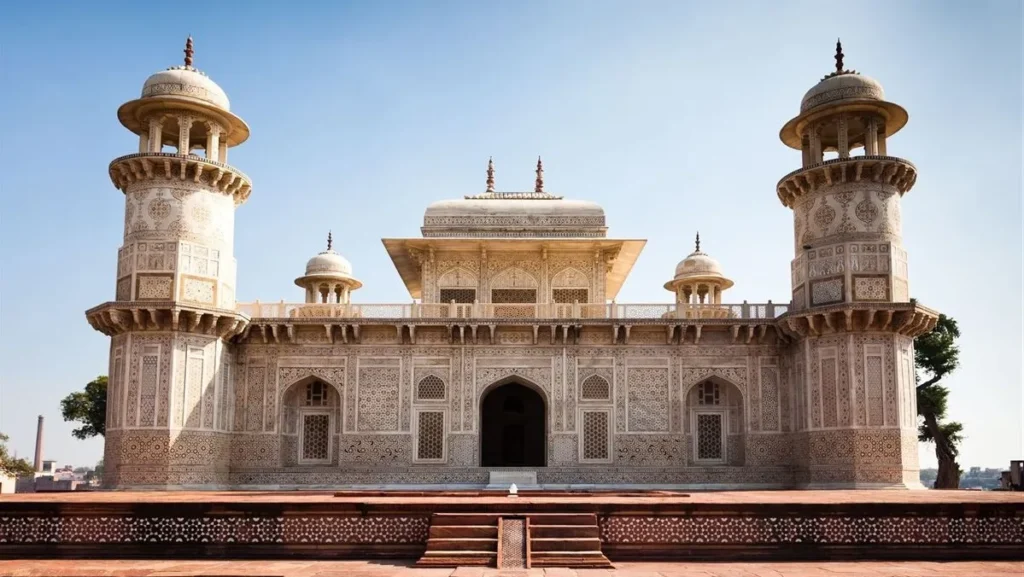
Itimad-ud-Daulah Tomb is one of the Mughal time monuments in Agra. It is situated on eastern bank of river Yamuna. This stunning Mughal mausoleum located on the eastern bank of the Yamuna River is an impressive example of beautiful white marble, vibrant stone inlay, intricate marble Jalis and inspired by Persian styles.
The tomb was constructed by Empress Nur Jahan as a tribute to her father Mirza Ghiyas Beg. The tomb has become a significant part of Mughal architecture due to the detailed design and the symmetry of the gardens. This reflects the artistic nature of the Mughal era and gives a glimpse into how architecture developed during this period, which later became more prominent in the Taj Mahal. Whilst not as grand as the most famous landmark in Agra, the Baby Taj still holds a piece of history and its architecture is impressive. Every aspect of the tomb, from its ornate walls to the tranquil garden setting, are all interesting to explore.
If you are interested in Mughal history, historical landmarks and sightseeing in Agra then this guide will provide you with all the information you need to know about the Itimad Ud Daulah Tomb. We’ll take a look at its history, architecture, famous aspects, ticket prices, opening times, best time to visit and travel tips.
Itimad-ud-Daulah Tomb at a Glance
Some quick facts about the monument before we dive into the history and architecture of it.
| Details | Information |
| Location | Agra, Uttar Pradesh, India |
| Built by | Empress Nur Jahan |
| Built in memory of | Mirza Ghiyas Beg |
| Construction period | 1622–1628 |
| Architectural influence | Mughal and Persian |
| Main building material | White marble |
| Famous for | Marble inlay, jali screens and detailed decoration |
| Visiting hours | Sunrise to sunset |
| Ideal duration | Around 45 minutes to 1.5 hours |
| Best time to visit | Winter (October to March) |
History of Itimad-ud-Daulah Tomb
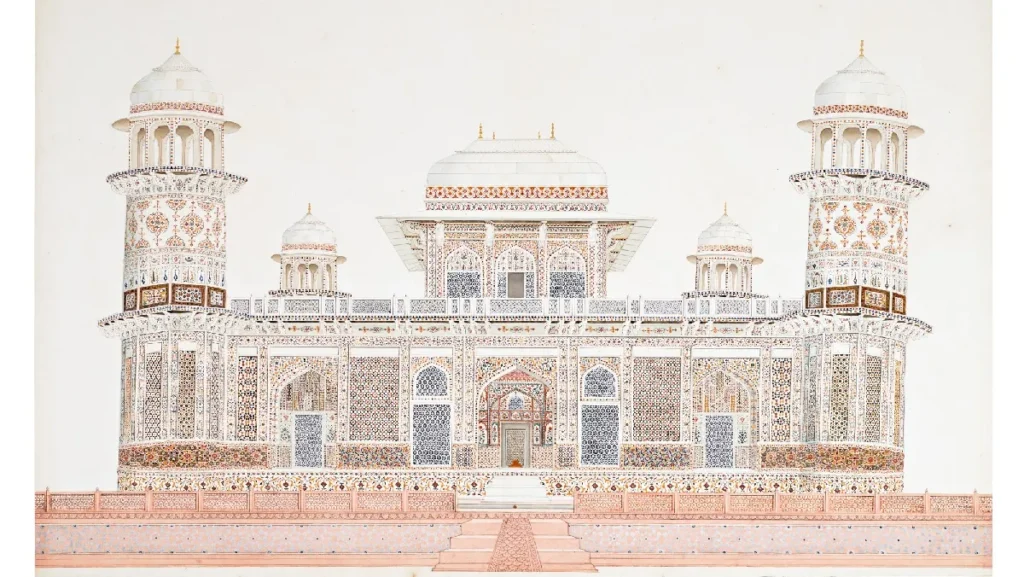
The story of Tomb of Itimad-ud-Daulah is also steeped in Mughal royal history as Empress Nur Jahan who was the daughter of Mirza Ghiyas Beg. The monument was designed by the order of Nur Jahan following her father’s death and built in 1622-1628. The monument started as an example of the new architectural style popular in the time of Emperor Jahangir. An important aspect of the tomb is that it demonstrates the increasing popularity of white marble and decorative stonework amongst Mughal architecture, which can be seen more widely in later monuments like the Taj Mahal.
Who Was Mirza Ghiyas Beg ?
Mirza Ghiyas Beg was a Persian nobleman who came to India with his family and was appointed to the Mughal court. By means of his administrative skill and his service, he earned the trust of the Mughal emperors. He attained high administrative and financial status. He became prominent in the imperial service. Eventually, Emperor Jahangir conferred upon him the title Itimad-ud-Daulah (literally translated as Pillar of the State). He was the father of Nur Jahan who emerged as one of the most powerful women in the Mughal history. Her relationship as his wife in the royal court also held major power and control over the political, cultural and architectural affairs in the empire.
Who Built the Tomb of Itimad-ud-Daulah ?
Itimad-ud-Daulah’s Tomb was built by Empress Nur Jahan in honour of her father Mirza Ghiyas Beg although, Nur Jahan (Emperor Jahangir’s wife) was a woman with some significance in Mughal political and cultural history. She was a woman with interests in architectural design, plants and (at least) a learned person. After her father’s death, she undertook to have him interred in an elaborate mausoleum. The monument was started in 1622 and finished in 1628. It would go on to be one of the more recognizable examples of Mughal architecture of the era.
Why Was Itimad-ud-Daulah Tomb Constructed?
Its main function was designed to be the last resting place of Mirza Ghiyas Beg and his wife Asmat Begum. This was, however, also a monument of love erected by Nur Jahan in affectionate remembrance of her father and mother. The monument was designed and built in a delicate style and detailed marble inlay work combined with a tranquil garden setting suggests the reverence held for it. At the same time, the building project took place during a time of architectural evolution throughout the Mughal Empire, with white marble, multi-coloured inlay and detailed decoration all making great headway.
Importance During the Mughal Empire
Itimad-ud-Daulah Tomb was a new chapter in Mughal Architecture. Red sandstone was the most common material in the construction of Mughal buildings in north India, while marble was restricted to decorative work. Here marble was largely featured as an ornamental element. The building’s architecture attests to the evolution of Mughal art in Jahangir’s time. On the development of Mughal architecture, the monument is significant in that many of the decorative motifs, as well as the ideas for the composition of structures, are significantly more sophisticated in later buildings, particularly the Taj Mahal.
Architecture of Itimad-ud-Daulah Tomb
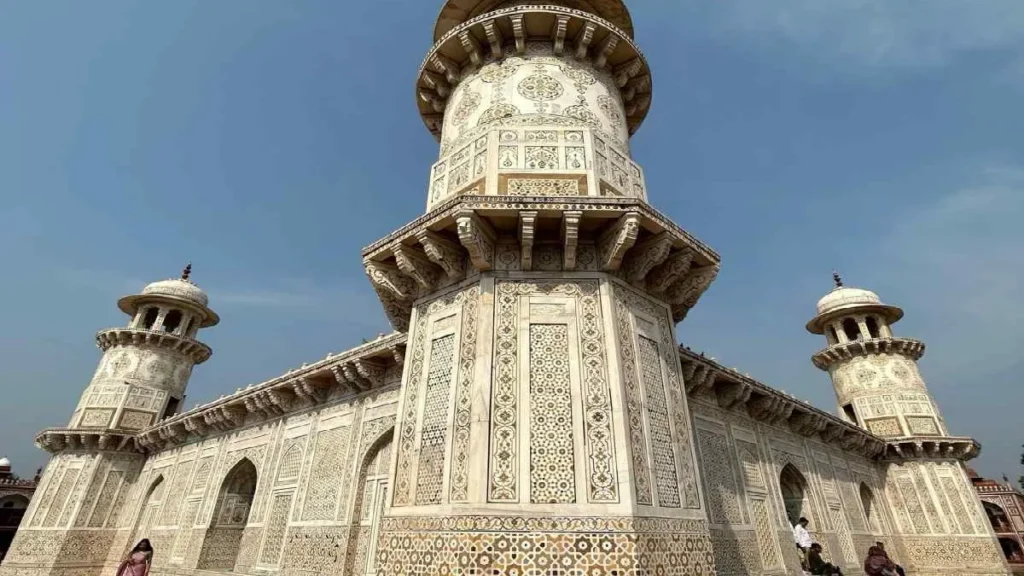
Itimad-ud-Daulah Tomb architecture is the prime reason for the popularity of Mughal monument among visitors. It is a double-chamber tomb built in the Persian style and architecture and Mughal design. There are marble facades, inlay carvings, and screens coupled with a symmetrical garden. Unlike some of Agra’s other monuments that are grand in size, its appeal is in the smaller details. The artwork, and intricately carved screens and decorative patterns come to life when viewed from very close up.
White Marble Construction : One of the most striking features of the tomb is how much white marble was used. This gives it such an elegant and delicate look compared to the red sandstone that was used in previous Mughal architecture. The white marble also looks stunning as a background to the brightly coloured patterns. The outside of the tomb has beautiful details showing the workmanship of the architects. Due to the changing sunlight throughout the day the marble has different areas that will reflect light giving the monument a very appealing look for photographs.
Persian Architectural Influence : The design of the tomb shows a lot of influence from Persian architecture. The symmetry, patterned and garden layout is very prominent. The proportions are well balanced with archways and patterns. It is clear to see that Mughal architecture took a lot of influence from the Persian style. This is a fantastic example of how the Indian culture incorporated this style.
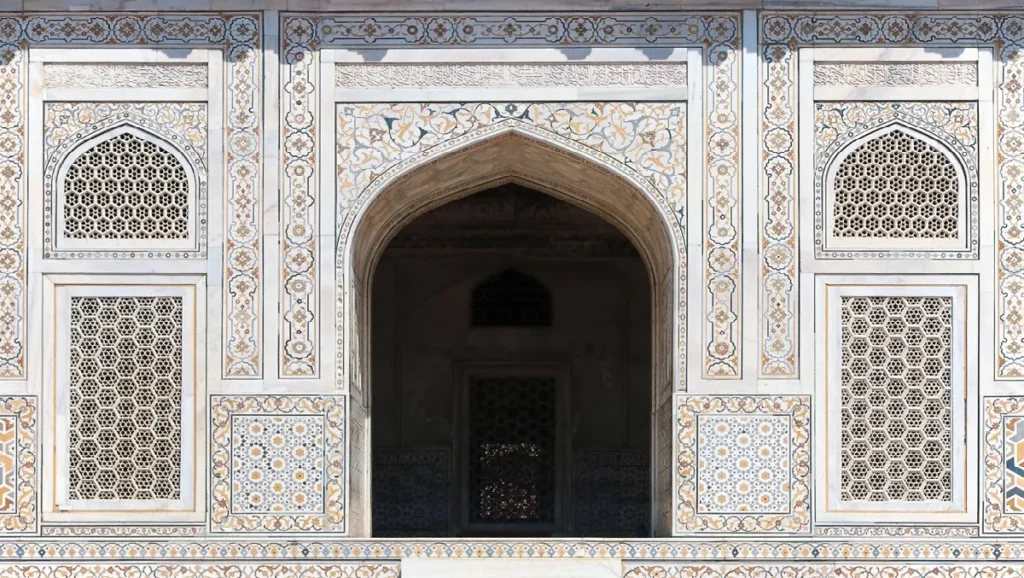
Pietra Dura Stone Inlay Work : The decorative stone inlay is one of the most extraordinary elements of the monument. This method refers to the inlay of cut and fitted semi-precious and coloured stones with marble. At the tomb, we see designs such as trees and flowers, but also vases and different symbols. The arrangement of the colourful stones looks stunning on the white marble. Fine craftsmanship of such a quality that the walls are observed as if it was “painted” artwork on the marble. This method was later put to particular use in the Taj Mahal, where decoration of a similar style is visible on a much greater scale.
Marble Jali Screens : One of the beautiful features of this monument is the work of marble Jali. Jalis are intricately carved stone screens with geometric or floral-shaped openings. They are used to filter natural air and light from the interior spaces providing privacy. Inside the Itimad-ud-Daulah Tomb, these transient light screens add to the beauty of the tomb. From this distance, it is especially astonishing that these works are so finely and meticulously made. A mixture of carved marble and natural light contribute to the special feeling of the space.
Charbagh Garden Layout : The tomb sits in a garden based on the traditional Charbagh style. This has been inspired by Persian design with paths and water ways creating 4 sections. The symmetry creates a balanced environment around the central mausoleum. The garden is an important part of the architecture with the paths and plants give different views to admire the white marble. It is a calm area providing a nice contrast to the busy streets of Agra.
Interior Decoration and Craftsmanship : Design on the interior of the tomb includes painted surfaces, painted designs and carved architectural features. In the main chamber, the cenotaphs of Mirza Ghiyas Beg and his wife, Asmat Begum, are placed. Painted decorations, on the ceiling and the marble panelling, bring out the artistic style of this era. The decorative decorations present a lively interior. The interior is thus an integral part of the structural experience of this monument. Do not just make the decision of examining the outside part of the building when you pay a visit to the site.
Famous Features to See Inside Itimad-ud-Daulah Tomb
The beauty of the monument goes beyond the plain exterior. Visitors should also discover the various architectural designs and the garden that goes around the monument. These are some of the things to look for.
Main Marble Tomb Structure : The highlight of the whole complex is the central mausoleum. White marble stone work and marble stone work in front of monument, symmetry of monument in a spiritual lane and decorative stone work are some of the most attractive monuments in Agra. The building is set in a meticulously designed garden so visitors can look at it from a variety of angles. Notice the floral motifs and the coloured inlay work in the exterior walls. These are among the most beautiful of the features of the monument.
Central Chamber : It is a vital feature of the tomb. It is home to the cenotaphs of Mirza Ghiyas Beg and his wife, Asmat Begum. Mughal style decorations are all around within the mausoleum. For visitors interested in the history of the monument the chamber holds a special interest.
Decorative Marble Screens : The marble Jali screens are some of the finest architectural details of the complex. By using professed panels, they wanted a cool part of the facade to let natural light into the building. Light penetrating through the fine structure also casts a decorative shadow inside. These screens show what a painstaking process traditional stone carving is. They are one of the most fun parts of photographing architecture.
Four Corner Towers : Each of the four corners of the main building is indicated by small towers; these areas stand out thanks to the symmetry of the building. This feature provides the symmetrical outline of the mausoleum and contributes to its design. These positioning also gives the building a silhouette when viewed from the garden.
Marble Inlay Decorations : The garden around the monument is a wonderful and peaceful place to walk and enjoy the attraction. The green space, paths and symmetry all work together to provide a pleasing contrast to the large white marble building. Some of the best spots to take pictures of the entire mausoleum are also in the garden. Strolling along paths within the gardens and viewing the building from different points of vantage.
Garden and Pathways : It is a stunning setting for a peaceful walk in the garden. Its woodlands, tree planting and symmetry provide a good contrast against the building built of white marble. The gardens offer some of the perfect angles to photograph the entire mausoleum. Walk around the garden and discover different views of the building.
Yamuna River Surroundings : The monument location is close to Yamuna River. The river played a major role in Mughal town planning, and a number of the city’s most prominent monuments were constructed adjacent to its banks. These settings give visitors a window into the city’s Mughal history, and help contextualize the significance of riverside sites in historical structures.
Why is Itimad-ud-Daulah Tomb Called the Baby Taj ?
The Itimad-ud-Daulah Tomb is commonly referred to as the Baby Taj due to the architectural similarities to the Taj Mahal. Features such as the large use of white marble, ornate stonework, symmetry and well-designed gardens are present on both buildings. However, the Baby Taj is an independently designed building and has its own unique history and significance within the Mughal design era. The name ‘Baby Taj’ refers to the similarity in decoration and the use of marbles.
Similarities Between the Baby Taj and Taj Mahal
There are a few elements in the architecture of both places, that make the comparison interesting, their major similarities are as follows:
- Extensive use of white marble.
- Decorative Pietra Dura stone inlay.
- Symmetrical architectural planning.
- Mughal garden layouts.
- Intricate floral and geometric designs.
- Locations connected with the Yamuna River.
- Attention to detailed craftsmanship.
The entire nature and architecture of both monuments represent the Mughal’s love for memorial architecture. The key difference between them is their size and design: the Baby Taj is a smaller building with many intricate decorative details and the Taj Mahal is an enormous monument with a large dome, minarets and gardens. The construction of the Baby Taj was ordered for Mirza Ghiyas Beg and his wife, as compared to the Taj Mahal which Shah Jahan ordered for Mumtaz Mahal in memory. People also visit each of the monuments and learn about the development of design in Mughal architecture.
Itimad-ud-Daulah Tomb Timings
Generally this attraction is open from sunrise to sunset.
| Details | Timings |
| Opening time | Sunrise |
| Closing time | Sunset |
| Weekly closure | Open all seven days |
| Best visiting period | Early morning or late afternoon |
Head here in the early morning for a more peaceful visit or in late afternoon if you are a fan of photography. The actual time of sunrise and sunset will vary depending on the time of year so be sure to plan your visit around these times. It is always best to check what the latest times are before you visit.
Itimad-ud-Daulah Tomb Ticket Price
The price to enter the site is generally cheap compared to some of Agra’s most popular landmarks. The following price has been given by the Agra district:
| Visitor category | Listed entry fee |
| Indian citizens | INR 30 |
| SAARC and BIMSTEC nationals | INR 30 |
| Other foreign nationals | INR 310 |
| Children below 15 years | Free |
Note : Ticket prices are subject to change and additional fees may apply. Check on current prices before your visit. May be obtained at the entrance of the monument or through the official online booking system of ASI: ASI Ticket Bookings Official Portal Foreigners might have to pay an additional toll charged by the Agra Development Authority. Find out the latest policy and take a look at the overall cost at the time of buying your ticket.
Best Time to Visit Itimad-ud-Daulah Tomb
Agra can get very hot in the summer months but is pleasant in the winter with seasonal rainfall in the monsoon. The best time to visit historical monuments is usually during the cooler months, however, early mornings and late afternoons can be a great option during the hotter months.
Winter Season (October to March) : This is generally the most pleasant time to visit historical monuments in Agra. The weather will generally be pleasant for exploring the gardens, marble buildings and nearby attractions. October and November will generally be pleasant for visiting however it can be quite cold in December and January. There may be some fog in the mornings. February and March are also good months to visit before the temperatures start to rise.
Summer Season (April to June) : The summer in Agra is very hot especially during afternoons. Sightseeing outdoors can be less enjoyable when the weather conditions are very warm. If you will be outside, travel as early in the morning or as late in the day as possible. Hydrate, wear loose fitting, light clothing and don’t stay out in the sun for extended periods of time.
Monsoon Season (July to September) : The monsoon season in Agra experiences a rainy phase as well as increased humidity. The gardens, or the landscape around the gardens, can be very green during this time of year. Rain might disrupt your walking tour, and, humidity will make wandering the grounds a bit more miserable. You will have an opportunity to have a monsoon visit, so look at the weather forecast beforehand, and, take an umbrella or rain cover.
How to Reach Itimad-ud-Daulah Tomb ?
This monument can be reach by different ways including :
By Air : There is an airport in Agra however you may not find many flights available. Those coming from other major cities in India can fly into Indira Gandhi International Airport in Delhi and then travel to Agra. From the airport in Agra or elsewhere you can take a taxi.
By Train : There is a railway connection between India and Agra. Agra Cantt is one of the major railway stations used by the tourists visiting the city. Other railway stations of Agra that are in use are the Agra Fort Railway Station and the Raja Ki Mandi. A taxi, auto-rickshaw or local bus are available for hire from the train station to the mausoleum. It is recommended that you check your arriving station with your train at least the day before.
By Road : Agra has road links to Delhi, Jaipur and other major cities in Northern India. Those visiting from Delhi can take the Yamuna Expressway. Agra also has links via National Highways and other major roads. From central Agra you can take a taxi or auto rickshaw.
By Local Transport : Taxis, auto rickshaws and app-based cabs are commonly used when travelling around Agra. Local transport can be useful if you are looking to visit multiple attractions. If you are visiting multiple monuments then taking a local taxi for a couple of hours can make your visit more convenient.
Places to Visit Near Itimad-ud-Daulah Tomb
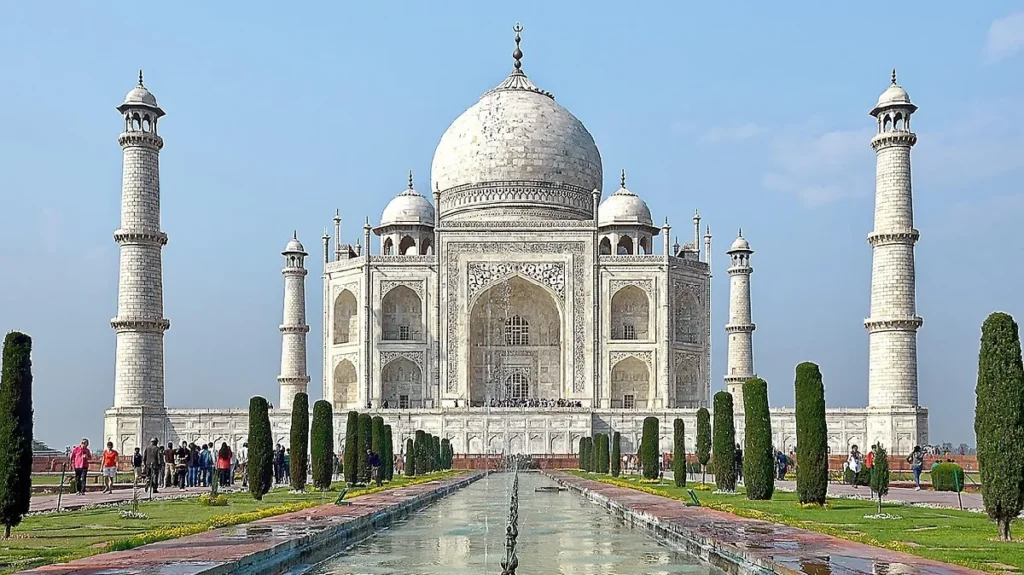
One of the benefits of the site being located here is the proximity to other famous sites. There is also a lot more to see around Agra.
Taj Mahal
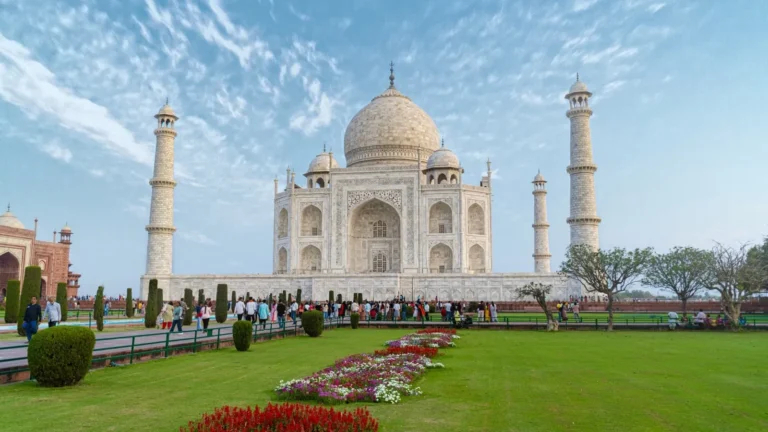
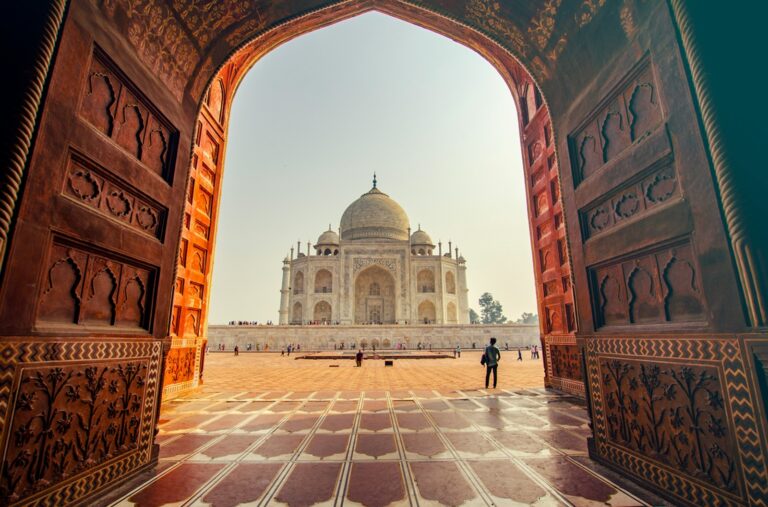
Taj Mahal is the most iconic monument of Agra and the most popular example of Mughal architecture. It was built by Emperor Shah Jahan in memory of Mumtaz Mahal and is famous for its white marble architecture, symmetrical gardens, massive dome and elaborate inlay work. Taking a trip to the Taj Mahal offers an excellent opportunity to appreciate the work of art created during the Mughal age. If you are heading to see this monument, go through our Taj Mahal Tour Guide for its history, architecture, tickets, timings, and a few travel tips.
Agra Fort
Another key Mughal landmark is Agra Fort. This is a UNESCO world heritage site. The Fort was mainly built by Emperor Akbar, but was also expanded upon by other Mughal rulers. There are some incredible palaces, audience halls and buildings within this. It gives an interesting insight into the Mughal period which differs from the beautiful marble structures of the Baby Taj. See our Agra Fort guide to learn more about the history, architecture, famous buildings, ticket prices and opening times.
Mehtab Bagh
Mehtab Bagh is a Mughal Garden on the other side of the Yamuna River from the Taj Mahal. This is particularly popular among visitors wishing to get a stunning view of the Taj Mahal from the opposite bank of the river. This garden has a very tranquil feeling to it and is particularly nice in the late afternoon. All photography enthusiast travellers may be able to squeeze in Mehtab Bagh along with their Agra sightseeing trip.
Chini Ka Rauza
Chini Ka Rauza is an obscure Mughal tomb near Itimad-ud-Daulah. Famous for its glaze glazed tile decoration in Persian style, the monument has a special look. The burial place is linked to Afzal Khan, a Persian poet and scholar who worked at the court of Shah Jahan. Combination of both monuments can also be done in a single sightseeing tour for who is keen on Mughal Decorative Arts.
Akbar’s Tomb, Sikandra
Akbar’s Tomb is found in Sikandra on the edge of Agra. The final resting place of Emperor Akbar, famed for its mix of red sandstone and marble decoration and incredible gateway architecture. It shows Akbar’s architectural pursuits and another way to examine the evolution of Mughal architecture. This is something you may want to take into account when planning a more extended Agra sightseeing itinerary.
Jama Masjid, Agra
The Jama Masjid in Agra is one of the prominent historic mosques from the Mughal era. Commissioned by Shah Jahan’s daughter Jahanara Begum, it is known for its wide courtyard and architectural features and its history. It is situated in the historical city centre area near to the Agra Fort and its markets.
Travel Tips for Visiting Itimad-ud-Daulah Tomb
A few days of planning can make the visits more comfortable and enjoyable as ere are a few practical tips you should take note before you go to the monument :
- Plan your tour itinerary from early morning
- Book accommodations and transportation in advance
- Wear comfortable clothes and footwears
- Carry refillable water bottle
- Book your ticket online to avoid queue
- Respect the monument
- Follow monument rules
- Allow enough time for sightseeing
- Hire authentic tour guide
Conclusion of Itimad-ud-Daulah
The Itimad – ud – Daulah Tomb is one of the most beautiful historical monuments in Agra featured with the white marble structure, vibrant stone work, intricate Jali screens, and, tranquil garden make it stand out from other grander more famous monuments within the city. It has great significance in Mughal history due to the fascinating story surrounding Nur Jahan and her father Mirza Ghiyas Beg. The tomb represents an important time in architectural development. If you are looking to explore Agra outside of the Taj Mahal then take some time to visit the Baby Taj. This monument is very detailed and has a calming feel. History lovers, architecture fans and those wanting to learn more about India’s culture will enjoy visiting!
FAQs – Itimad-ud-Daulah Tomb
Q. What is Itimad-ud-Daulah Tomb famous for ?
Ans. The tomb is famous for its beautiful white marble architecture with elaborate Pietra Dura work, delicate marble Jali work and the Persian architecture.
Q. Why is Itimad-ud-Daulah Tomb called the Baby Taj ?
Ans. The Tomb is referred to as the Baby Taj because of the similarity in architectural design of the Taj Mahal. The white marble, colourful stone work, symmetry and Mughal Garden design are quite similar.
Q. Who built the Tomb of Itimad-ud-Daulah ?
Ans. This tomb was built by empress Nur Jahan.
Q. When was Itimad-ud-Daulah Tomb built ?
Ans. It was built between the year 1622 and 1628.
Q. Whose tomb is Itimad-ud-Daulah ?
Ans. This is the tomb of Mirza Ghiyas Beg (Itimad-ud-Daulah) and his wife Asmat Begum. It was ordered by their daughter Empress Nur Jahan.
Q. What is the entry fee for Itimad-ud-Daulah Tomb ?
Ans. The entry fee mentioned here is for Indian citizens and SAARC/BIMSTEC national, which is ₹30. And other foreign nationals are charged ₹310 as the ticket fee. The fee is for children under 15 free entries. Pricing is subject to change, so check the official ASI booking portal before your visit.
Q. What are the visiting timings of Itimad-ud-Daulah Tomb ?
Ans. The visit time of the tomb is from sunrise to sunset.
Q. How much time is needed to visit the Baby Taj ?
Ans. Most people will want to spend around 45 minutes to an hour and a half exploring the Baby Taj. This includes looking at the marbles, internal design, gardens and paths. If you are looking to take photos you may want to spend longer.
Q. What is the architectural style of Itimad-ud-Daulah Tomb ?
Ans. Itimad-ud-Daulah tomb has a Mughal and Persian style.
Q. How far is Itimad-ud-Daulah Tomb from the Taj Mahal ?
Ans. It takes about 5-6 km in a car or taxi to reach Taj Mahal from Itimad-ud-Daulah Tomb (via any of the roads). Auto rick shook could also be hired to travel between the two monuments.
Enquiry Now
Recent Blog:
Agra Fort: History, Architecture, Tickets, Timings & Travel Tips
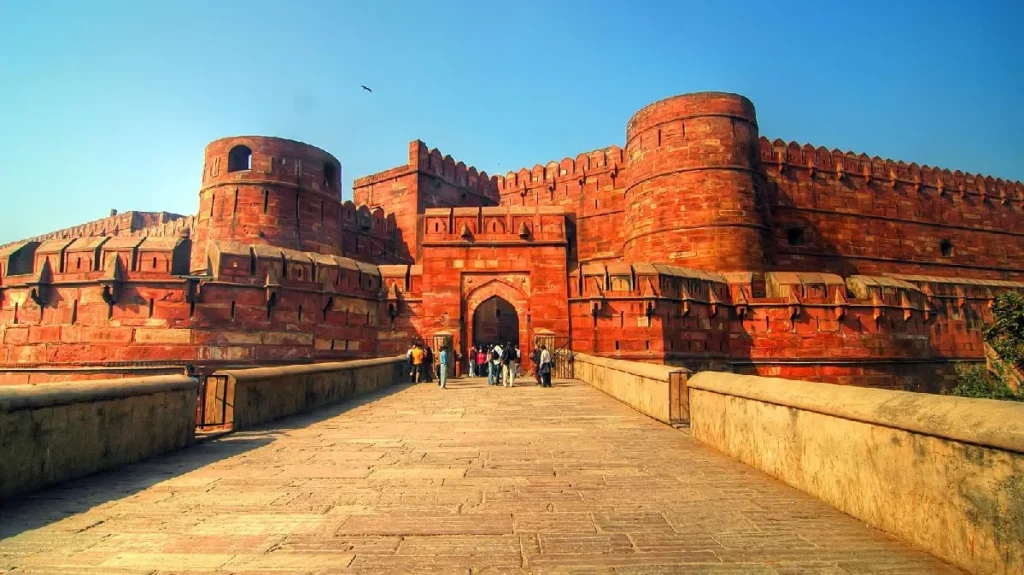
Whilst learning about the Mughal history of Agra be sure to also visit the magnificent Agra Fort. This is one of the amazing Mughal monuments that can be found in this city. This fortress is famous for its huge red sandstone walls, stunning palaces and beautiful historical courtyards. By reading our in-depth Agra Fort Travel Guide you will learn all about the history of this fort including the architecture, ticket prices, times and travel tips.
One Comment